
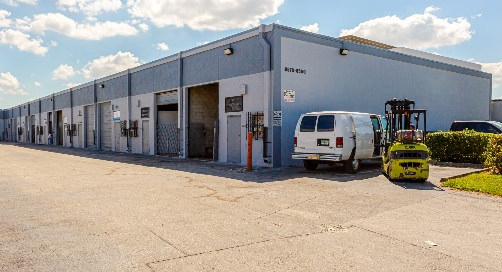
Tampa, Florida; Columbus, Ohio; rank as strongest small-bay industrial markets
An updated analysis of the nation's largest industrial markets found that demand for small bay industrial space remains remarkably durable in select markets despite broader weakness across the sector.
While larger warehouses continue to grapple with elevated vacancy in many markets, smaller facilities, often favored by local distributors, contractors, service businesses and light manufacturers, continue to see limited new supply and strong tenant demand.
Using a weighted ranking of leasing activity, vacancy performance, inventory expansion and rent increases, Tampa, Florida; Columbus, Ohio; and Salt Lake City, Utah, emerged among the strongest-performing small-bay markets in the country. Tampa ranked first overall, Columbus second, and Salt Lake City sixth in the updated analysis.
The rankings are based on changes in leasing activity for industrial spaces under 50,000 square feet relative to pre-pandemic levels, rent growth since 2019, inventory expansion, and the amount of available small bay space in the market. Markets that combined strong tenant demand with limited new supply generally received the highest scores.
Tampa captures top spot
Tampa ranked first overall thanks to exceptional rent growth and some of the strongest leasing momentum among small bay tenants nationally. The central Florida market ranked third in leasing activity growth and first in rent growth in the updated analysis.
Leasing activity for small bay industrial space in Tampa remains substantially higher than pre-pandemic levels, reflecting continued demand from construction, manufacturing, logistics and service-oriented businesses. At the same time, Tampa's small bay inventory has remained relatively constrained, with only a limited amount of new space added compared with many competing Sun Belt markets.
While Tampa's overall industrial market has weakened over the past year, small bay properties continue to outperform larger warehouse formats. The strongest tenant interest remains concentrated in smaller, newer industrial buildings, and developers have increasingly shifted their focus to smaller projects as demand for space in large speculative facilities cools.
The long-term rent performance of Tampa's industrial market underscores those supply constraints. Industrial asking rents have increased by roughly 50% over the past five years, and small-bay space remains difficult to replace in many infill locations. Relatively little new small bay industrial inventory is currently underway, helping to support balanced market conditions despite broader softness across the larger industreial sector.
Columbus benefits from population growth
Columbus moved into the second position nationally, supported by strong leasing activity and elevated rent increases. The Ohio city's small bay market ranked seventh for leasing growth and 15th for vacancy expansion, while maintaining balanced market conditions despite several years of increased industrial development.
Unlike many logistics-focused markets, the industrial market in Columbus has tightened over the past year. Market-wide industrial vacancy fell to 5.8%, while net absorption, a measure of the net change in occupancy, exceeded 10 million square feet over the previous 12 months.
The strongest demand for small bay space in Columbus was largely concentrated in two CoStar-designated submarkets, Airport and Hilliard, infill locations that have benefitted from increased population and demand for last-mile distribution space. Limited construction has helped keep availability relatively low, allowing landlords to maintain rent-pricing power despite broader economic uncertainty.
Rents for smaller industrial properties continue to reach new highs. In many of Columbus's most sought-after infill locations, space in small bay buildings is leasing at $10 to $12 per square foot, significantly higher than rents typically achieved in larger logistics facilities. Investors have increasingly targeted these properties as well, attracted by their stable occupancy, limited supply and prospects for future rent growth.
Supply constraints support Salt Lake City's small-bay performance
Salt Lake City ranked sixth overall despite the broader industrial headwinds affecting larger warehouse properties. The market ranked fifth nationally in leasing activity performance and 12th in rent growth, reflecting the resilience of smaller-format industrial space.
The overall industrial vacancy rate in Salt Lake City has increased in recent years as the number of large logistics developments added to the market has exceeded demand. The recent performance of small bay properties, however, tells a different story. Limited recent development and a shortage of move-in-ready space have helped maintain a better balance between supply and demand for small bay properties.
Tenants in Salt lake City continue to favor small bay spaces in established infill locations near transportation corridors and population centers with marketing times for small bay space remaining roughly half those of larger industrial buildings.
Rents also continue to demonstrate the segment's strength. Well-located small bay properties can command rents substantially above the market average, with some recent leases achieving around $15 per square foot, far exceeding rates typically seen in larger logistics facilities. Despite increased vacancy compared to 2022, small-bay availability remains relatively limited and continues to outperform the broader market.
The updated rankings suggest that while national industrial fundamentals have weakened, demand for small bay industrial spaces remains closely tied to population growth, local business formation, and scarce infill supply.
Markets that combine those characteristics continue to separate themselves from the broader industrial sector, even as larger warehouse markets navigate a more challenging operating environment.
(CoStar Analytics | By Juan Arias)
If you have questions or would like to read the related article, please contact us via email, and we will send you the link.